English Vocabulary for Kids: Weekend Activities
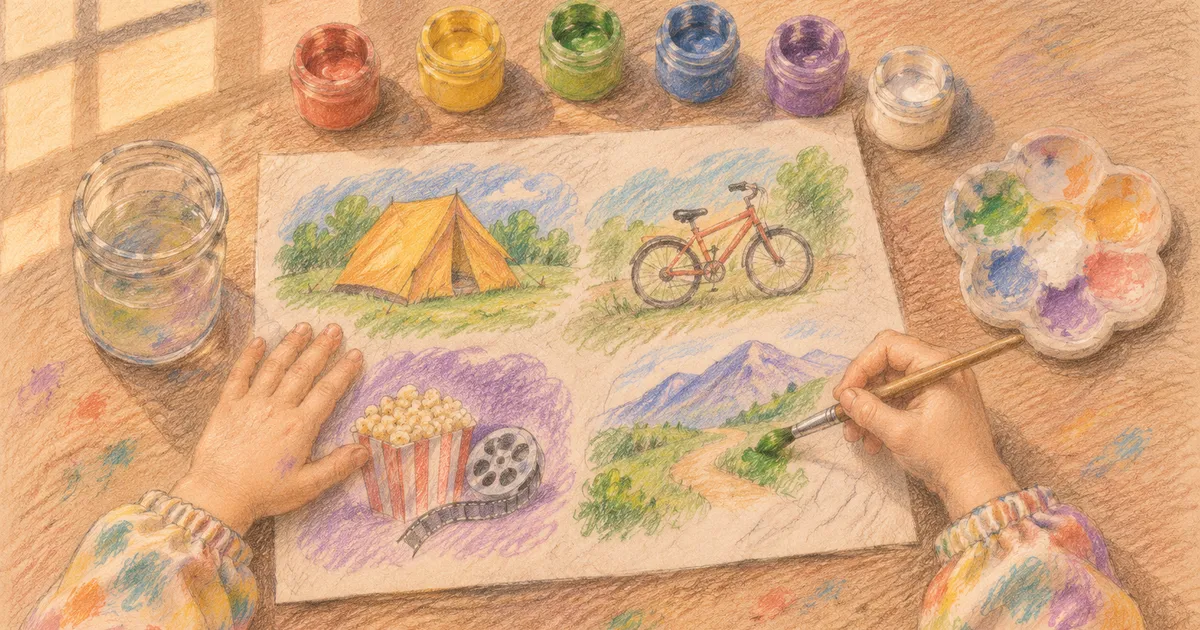
Six core verbs—play, visit, watch, make, go, and help—start Weekend Activity Vocabulary in English for Kids. Pair each verb with a familiar noun: play football, visit grandparents, watch a film, make pancakes, go cycling, or help at home. Practise six known activities until your child can answer: “What do you do at the weekend?” and “Who do you do it with?”
Core Words and Useful Phrases
Teach activities as complete chunks, not isolated nouns. “Cycling” names an activity, but “go cycling” provides a ready phrase. The pattern applies to go swimming, play games, watch television, and read a book.
Weekend Activity Vocabulary in English for Kids should reflect each family’s life. A child may visit cousins, attend a community event, go to a place of worship, spend time outdoors, or speak another language with relatives. Choose activities that fit your family instead of treating one routine as the norm.
Putting the Phrases into Context
Words become easier to recall when they answer real questions. Ask, “What do you do at the weekend?” Your child might reply, “I play basketball,” “I visit my grandmother,” or “I stay at home.” Accept a short answer, then model the full sentence.
Add time and opinion phrases: “On Saturday morning, I go swimming” or “I like drawing because it is relaxing.” Weekend Activity Vocabulary in English for Kids supports short exchanges: “Do you play outside?” “Yes, I do.” “Who do you play with?” “I play with my cousins.”
Use a real weekend
On Sunday evening, choose three activities your child did. Say each phrase, act it out, and place it in a short sentence.
Multilingual children may understand an activity before knowing its English phrase. Let them explain with a gesture, picture, or another language, then provide the English chunk. Communication stays central while the wording enters memory.
Activities for Different Ages
For school-age kids, choose four to six visible actions such as play, run, draw, cook, read, and sleep. Use toys, family photographs, or mime. Ask either-or questions: “Do you read or play?” Children can point, act, or answer with one word before producing a full phrase.
For school-age kids, group phrases by place or time: at home, outdoors, with family, and with friends. Build a weekend plan with morning, afternoon, and evening slots. Weekend Activity Vocabulary in English for Kids then forms a meaningful sequence instead of a memory test.
For school-age kids, add detail and contrast. Learners can compare a typical weekend with last weekend: “I usually meet friends, but last Saturday I stayed at home.” They can give reasons, express preferences, and ask follow-up questions. Retain familiar core phrases while increasing sentence difficulty.
Practice That Fits Family Routines
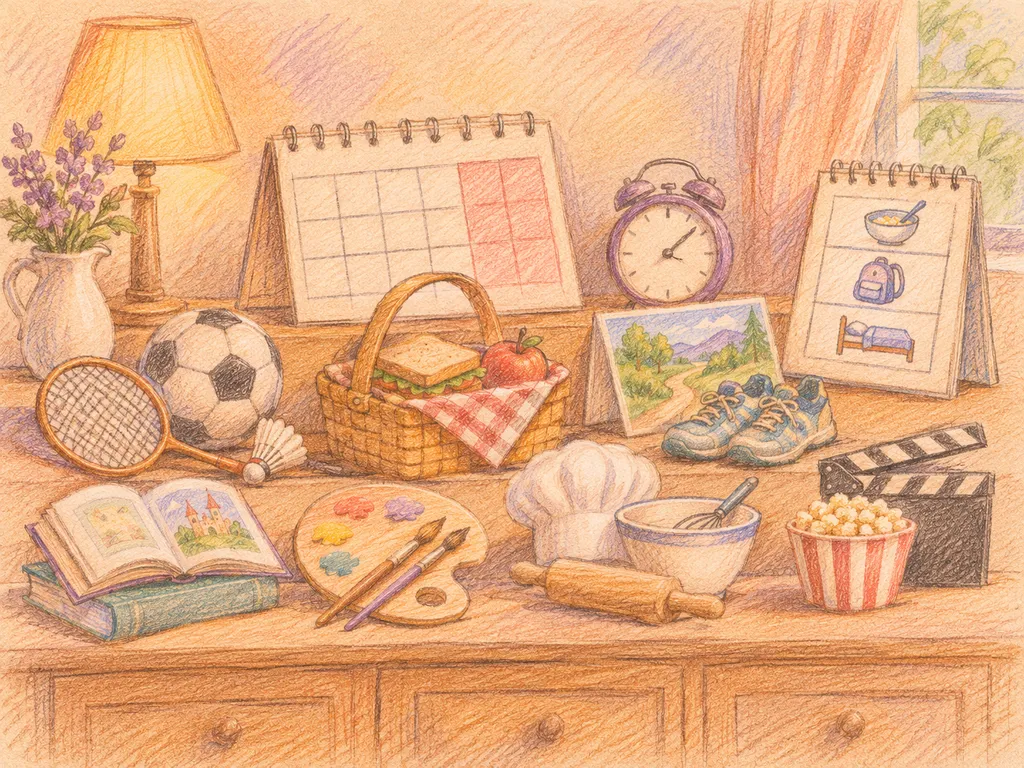
Short, repeated practice fits weekends better than one long session. Revisit phrases during breakfast, a journey, or evening planning. Keep the language stable while changing the task: point to a picture, mime an action, sort phrase cards, then speak.
A simple practice routine
- Choose six activities your child recognises.
- Say each phrase and ask your child to repeat it.
- Match every phrase to a picture or gesture.
- Ask one question about each activity.
- Use three phrases to describe the real weekend.
- Review the same phrases two days later.
Keep correction light during speaking games. If your child says “I go to swimming,” respond with “You go swimming” and continue. The recast models natural English without turning each answer into a grammar test. LearnLink tutors can adjust phrase numbers and question difficulty for each learner.
Weekend Activity Detective
One person secretly chooses an activity. Others ask up to five questions: “Is it outdoors?”, “Do you need a ball?”, or “Can you do it at home?” Whoever guesses the phrase chooses the next activity.
For writing practice, make a three-box weekend diary labelled morning, afternoon, and evening. Your child writes or draws one activity per box. Younger children can copy a phrase; older learners can add where, when, with whom, and why.
Common Mistakes and Clear Corrections
Activity phrases follow different verb patterns: play tennis, go cycling, watch a film, and listen to music. Children may apply one verb to every activity while learning the patterns. Teach each verb-noun pair, then compare only two or three patterns at a time.
Two useful corrections
Myth: Every activity after “go” needs “to.”
Fact: We say “go to the park,” but “go swimming” and “go cycling.”
Myth: A child must produce a full sentence before the phrase counts as learned.
Fact: Pointing, choosing, and giving a short answer are steps towards independent speech.
Watch for missing small words. The natural phrases are listen to music, play with friends, go for a walk, and stay at home. Recast the whole phrase without explaining a long rule. Weekend Activity Vocabulary in English for Kids becomes fluent through hearing and reusing correct chunks in different situations.
- Choose five weekend activity words and say each one beside a matching picture.
- Model one correct sentence, then ask your child to repeat it naturally.
- Contrast two commonly confused verbs using clear examples from your family routine.
- Correct one mistake gently, and invite your child to try the sentence again.
- Review the five words with a picture-matching game before choosing tomorrow’s activities.
When a word has several meanings or pronunciations, Cambridge Dictionary is a useful check before turning it into child-friendly examples.
Frequently Asked Questions
How Many Weekend Activity Phrases Should My Child Learn at Once?
Beginners can start with four to six phrases linked to familiar activities. Children who already answer questions may manage eight to ten. Add language after your child can recognise and use most of the first set. Weekend Activity Vocabulary in English for Kids works best when phrases return in later conversations instead of appearing once in a long list.
Should I Translate the Phrases into My Child’s Other Language?
Translation can resolve unclear meanings, especially for children who use two or three languages. Keep it brief, then return to the English phrase, a gesture, and an example. Another language need not be banned. Your child should connect the English words with an action or experience and gain independence.
What If Our Family Does Not Do the Activities in the Table?
Replace them with activities from your routine. Your child might attend a family gathering, help in a shop, visit a library, practise music, or spend time with neighbours. Teach the English that describes real life. Familiar content gives your child genuine ideas for practising questions and answers.
How Can I Tell Whether My Child Remembers the Vocabulary?
Check understanding in different ways. Ask your child to point to a picture, mime a phrase, answer a question, and describe part of the weekend. Recognition often precedes confident speech. If your child needs a prompt, give the first word or two. Review missed phrases later without presenting the activity as a test.
Start this weekend with three actions: choose six familiar phrases, practise each in a short sentence, and review them two days later. When your child uses at least four without a prompt, add two new phrases.
A short one-to-one lesson can show what level and pace fit your child — book a trial English lesson.
Stay updated on our latest tips and resources by following us on Instagram LearnLink.